


Straddle powers as I’ve defined them are small but influential nations that use strategy, guile and a bit of luck to seize outsized global power. The key is to balance rivals off of each other and profit from the competition.
Consider a few examples. South Korea, whose stock market is up 178% over the past 12 months, has made itself the fulcrum between the United States and China while locking in key growth industries like high-bandwidth memory from Samsung and SK Hynix and protecting its industrialization in markets like shipbuilding. Turkey uses its Eurasia crossroads to masterful effect to maintain its autonomy, balancing NATO membership and drone exports to Ukraine against the specter of its engagement with Russia. Before the Iran war, the UAE used its wealth to build data centers for the U.S. AI industry while also deepening its connections with China.
There aren’t many straddle powers, and few countries are positioned to become one. One dramatic exception in the last few years is North Korea.
When Kim Jong Un inherited the Hermit Kingdom back in 2012 as its third-generation leader, an air of mystery surrounded him. He had been educated in Switzerland and groomed for the role, but he succeeded his father far earlier than expected in what is believed to be his mid-to-late 30s (like so much else in North Korea, we don’t know his exact birth date). What were his political views? Could he hold the security apparatus together? Would North Korea have another revolution or just collapse? Back then, no one knew the answer.
After all, North Korea was in dire straits. The paranoid leadership of his father Kim Jong-il had alienated even the country’s long-time ally, China, which was exhausted over the regime’s provocations of South Korea, including the sinking of the Cheonan navy corvette and the shelling of an island. Famine was rampant, and the state had increasingly lost control over the market as Chinese goods were smuggled over the Yalu River. Defectors reached a peak in 2009 and their numbers stayed elevated until 2011. It seemed the regime was all but doomed.
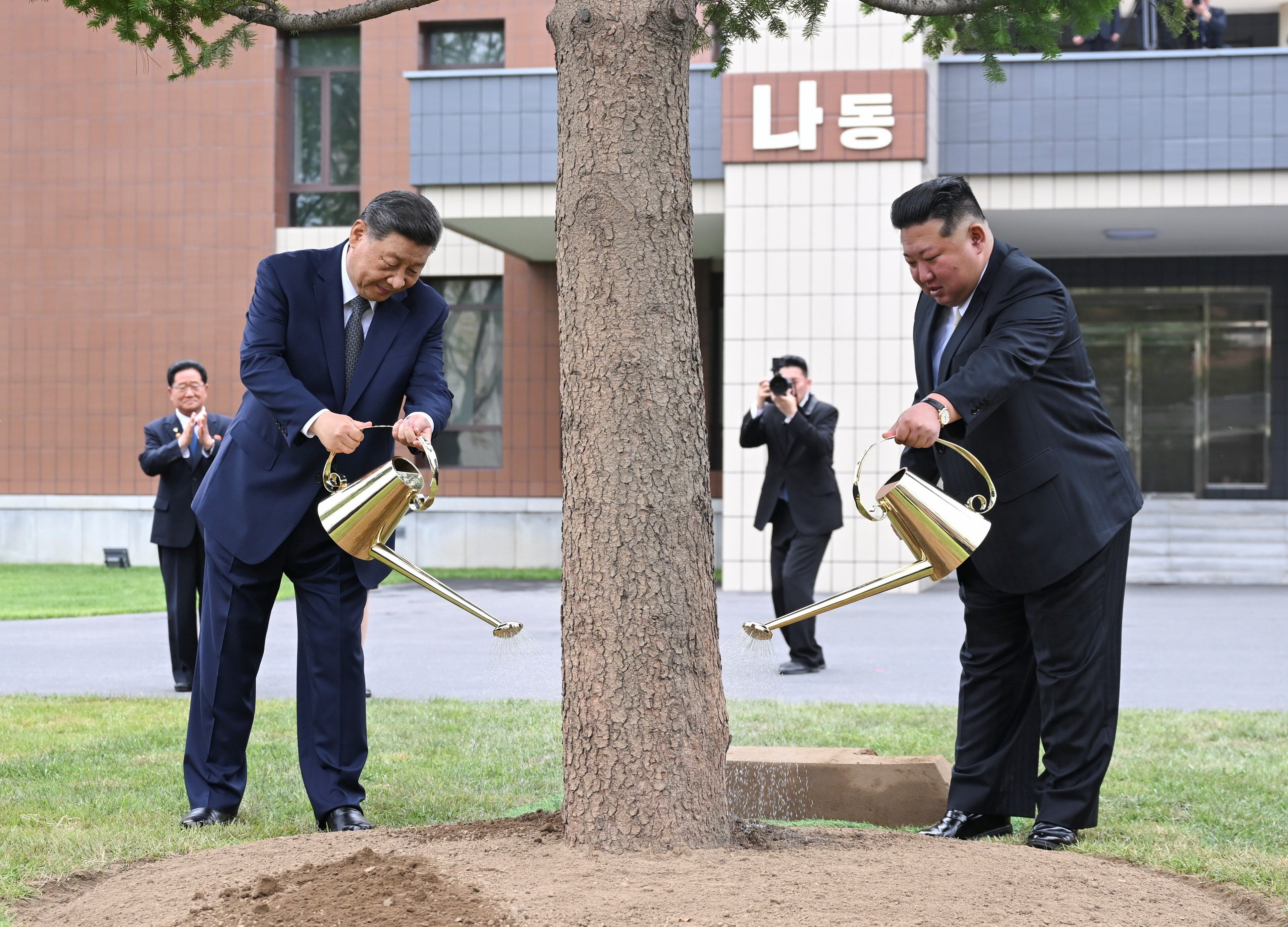
Fast-forward to the present day, and North Korea is now a straddle powerhouse atop which Kim Jong-un skillfully plays China and Russia off each other to the country’s profit. An estimated 16,000 of its troops have fought alongside Russia in the war on Ukraine, and its burgeoning defense exports (mostly to Russia) have subsidized a strategic industry while offering the regime a massive financial lifeline. Renewed trade with China after North Korea sealed its borders during Covid-19 has ushered in a flood of consumer electronics and EVs, completely reordering the material world of the communist “utopia.”
Both countries are paranoid North Korea is cozying up closer to the other. Last week, Chinese President Xi Jinping conducted a state visit to North Korea for the first time in seven years, attempting to draw Kim away from Russian President Vladimir Putin’s warm embrace.
Kim received a wonderful and historical gift from Xi: across a barrage of communiqués, the Chinese made no mention of denuclearization. A nuclear-armed North Korea is now a fait accompli, securing the 70-year-old dream of Kim’s grandfather and the country’s founder, Kim Il-sung. North Korea is now all but impervious to external threats, an outcome the United States has been attempting to forestall for decades (the current Kim undoubtedly looks at Trump’s losing Iran war gamble with satisfaction). Researchers estimate that it has about 50 warheads today, with more on the way. It has also proven to the world that it can deliver those payloads — including to the continental United States — after conducting hundreds of missile tests.
In short, Kim not only righted a decrepit and failing state, but has masterfully ushered North Korea into the center of global power.
I want to explore two questions. First, how did North Korea outplay the United States, despite bipartisan domestic consensus and widespread international condemnation of its actions, including from Russia and China? Second, how did a bankrupt country find the financial wherewithal to launch hundreds of missile tests and reach its nuclear ambitions while also strengthening the goods it offers its citizens?
The strategy of the infinite waiting game
I started thinking about this essay a few weeks ago when I read a jaw-dropping essay in Foreign Affairs by Victor Cha. Generally, reading Foreign Affairs is not a jaw-dropping experience; on the contrary, the only reason one’s jaw generally drops while reading it is because the twentieth page of a monograph on the liberal international order has finally induced REM sleep and a slippery string of saliva is drooling onto one’s chest.
(My abject apologies to my editor, who was a managing editor of Foreign Affairs for many years).
Cha is one of the great hawks on North Korea, and he was a key negotiator in the George W. Bush administration’s six-party talks to end the country’s nuclear activity. For years, he believed that the inherent political and economic contradictions in North Korea would eventually be its undoing, dubbing the country “The Impossible State” in his 2012 book, which happened to be almost perfectly timed with Kim’s arrival.
So it was with surprise that I read one of the most accomplished policymakers on the subject state bluntly that America’s jig is up. “The size and sophistication of North Korea’s nuclear arsenal today shows that [America’s] approaches have failed,” he argues, stating that “The United States cannot continue the same approach; doing so will only make its failures more acute.” Negotiations need to expand beyond nukes. “The one-dimensional focus on nonproliferation has also hamstrung the United States in other areas of importance in which it could negotiate, such as reducing the size of North Korea’s conventional military or improving human rights.” He concludes that “the United States needs a cold peace with North Korea.”
Cha should be feted for admitting what has been obvious to most observers for years and yet the DC foreign policy blob refused to countenance. His essay is headlined, “North Korea as It Is,” a reminder that America doesn’t get to invent the world as it wants, but must interact with it “as it is.” Official American policy is that denuclearization is the necessary first step before any other negotiations, a hands-over-eyes “nah-nah-nah” act that now reads as infantile. “Although many policymakers have implicitly accepted this idea,” he writes about giving up on denuclearization, “none will propose it publicly because insiders in Washington, Seoul, and Tokyo see it as equivalent to surrender.”
How did North Korea get away with it? Like all straddle powers, North Korea dexterously calibrated its foreign relations, exchanging provocation with peace offerings and vice versa as it wanted to tense relations or relax them. If China starts getting too prescriptive, then thaw relations with America and make the Chinese paranoid. If America gains too much leverage, then threaten massive death and destruction to get it to back off while worrying the Russians and Chinese that millions of refugees will flood into their countries. Negotiators understood this straddling, which is why the six-party talks included the United States, China, Russia, Japan and both Koreas.
Like some obsessive Silicon Valley founders I know, though, the simple truth is that North Korea just never stopped building. It pursued nuclear weapons with abandon for approximately five decades. There is scant evidence of any pause in its progress, whether from international sanctions, domestic famine or otherwise. The country had one singular goal, a goal that caused hundreds of thousands of deaths as scarce resources from unproductive communism were rerouted to maintain progress.
Save their own death or coup, autocrats can obviously focus on one goal forever. For democracies, the first challenge is that the rapid-fire news cycle has so attenuated attention spans that a perennial issue like North Korea’s nuclear program may be the focus of the public and the president for only a few hours before the chyrons and ticker move on. The exception is quite literally war, as we have seen with Iran the past few months, and really just the first few weeks after the initial strikes before drawn out negotiations got boring and we switched channels to watch a UFC fight on the White House lawn.
We simply don’t have the means to make consistent incremental progress on an issue, whether it is the nuclear aspirations of Kim or the housing dreams of the Abundance-pilled. This constant drift in attention is a key tool for straddle powers, which can maintain their focus while more powerful countries have many crises to attend to.
The second challenge, which is a perfect example of Riskgaming-style incentives, is that no elected leader wants to be the one to finally pull the emergency lever and take direct action and end the waiting game. No one wants to bear the brunt of voter anger over a long-simmering issue. If North Korea’s nuclear progress is inching along, certainly a successor can handle it when it becomes more of a problem.
Straddle powers are learning how to use this playbook through one example after another. If a government — elected or not — can be strategic with its goals and patient with its actions, power accrues. And sometimes, you can acquire the most powerful weapon known to man, and lock in that power for generations to come.
Entrepreneurialism with North Korean characteristics
It’s hard to be a straddle power without an economy, since trade negotiations tend to be a critical fulcrum for a country to accrue global influence. North Korea is a country in abject poverty, whose citizens suffer stunted growth from malnutrition and who die of diseases unknown in the modern world. So when Kim Jong-un took charge in 2012, he had two conflicting goals: building up the country’s anemic economic power while maintaining the country’s hardline communism that offered him singular authority.
Analysts for decades have predicted North Korea would follow China in moving toward a hybrid economic model of state-directed capitalism, predictions that intensified with Kim’s ascendance. Kim, however, had other ideas. Instead, he gained currency through two approaches straight out of a Neal Stephenson cyberpunk novel before scaling up a defense industrial base built on top of Russia’s war on Ukraine.
First, North Korea pioneered a fraudulent IT outsourcing industry predicated on misdirection and false identities that extracted at least $800 million of illicit revenue from the United States in 2024 alone. For comparison, North Korea’s nominal GDP is estimated at around $27 billion. While approximations of the scale of the fraud vary, experts suggest that thousands of North Koreans run the IT scams via hubs in countries like China and Laos. The business is getting more sophisticated too, with fraudsters using generative AI to fake voices and faces, allowing them to bypass identity verification algorithms installed by corporate information security departments.
Second, the country has developed one of the most extraordinarily successful cryptocurrency hacking groups in the world in the form of Lazarus Group and its affiliates. The group’s total haul over the last decade amounts to more than $6 billion, including an estimated $2 billion in 2025 alone. The regularity and scale of the thefts boggles the mind. Every few months, another hack is discovered and hundreds of millions more dollars pour into the Kim regime’s clutches. The group’s most recent successful and known hack was of KelpDAO, which lost $290 million in a complex heist a month ago.
Kim’s use of Lazarus is similar to Putin’s use of Wagner Group. Both dictators are using a private enterprise to do their dirty work in a plausibly deniable way. Yet Kim’s entrepreneurialism is striking. While Putin uses traditional models of resource extraction in Africa like gold mining, Kim has jumped forward to today, taking advantage of new markets like IT outsourcing and the rise of cryptocurrencies to seek profit. With billions of criminal gains flowing into North Korea’s economy, Kim built himself a lifeline to hold the country together.
His entrepreneurialism continued with Russia’s invasion of Ukraine in early 2022. Russia was expected by many military analysts to sweep through Kyiv in a matter of weeks if not months. Now four years later (longer than World War I), the battlefront seems all but fixed, with a few squiggles changing here and there as new tactics and autonomous weapons are deployed. Russia’s plight is both industrial (it doesn’t produce much outside of its energy industry) and human (a lack of manpower given the hundreds of thousands of casualties the country has already sustained).
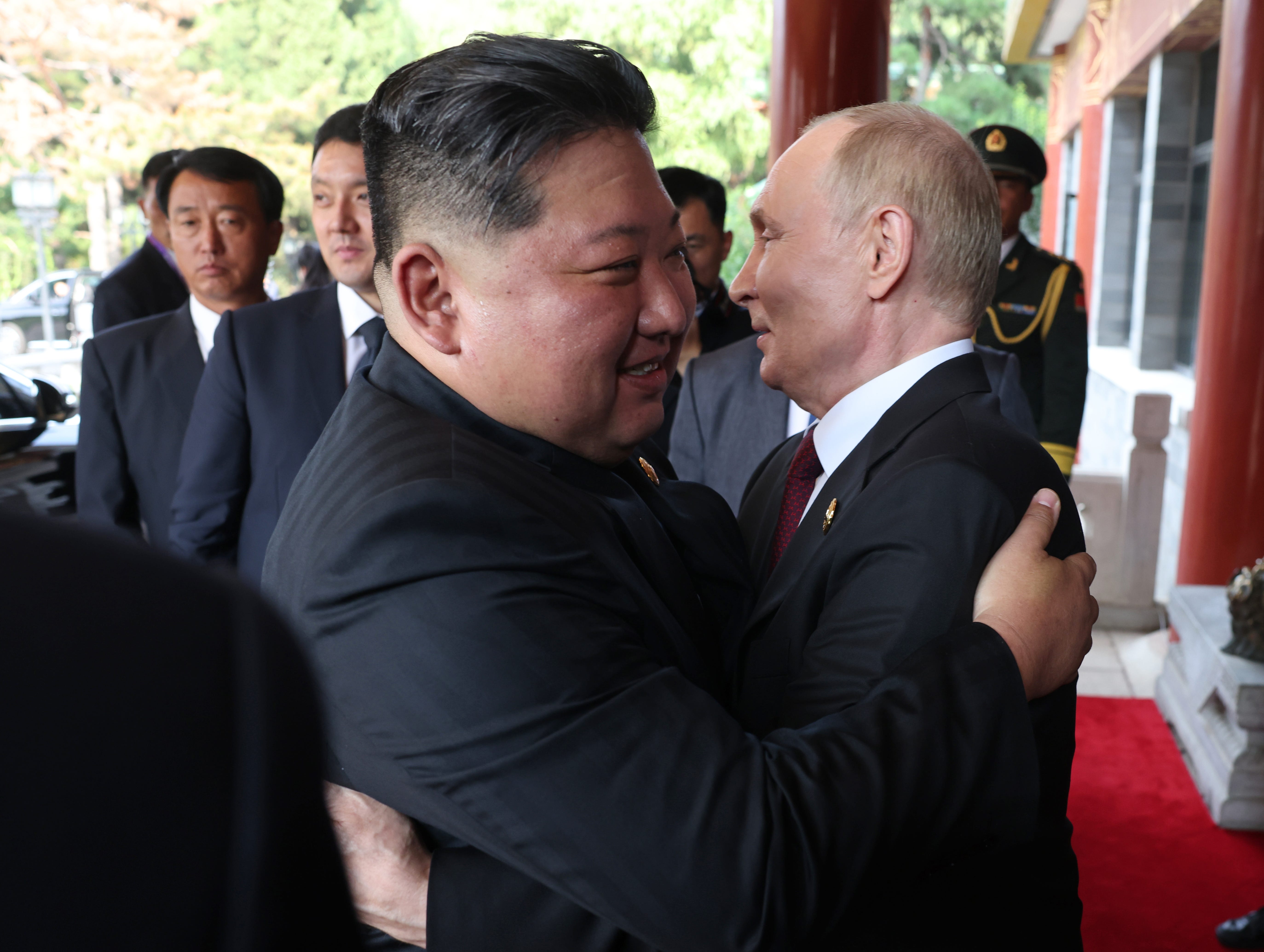
Kim took economic advantage of both of Russia’s challenges, while realizing that buttressing his relationship with Putin would also force China to offer him more in a classic straddle power stratagem. North Korea began exporting large quantities of munitions to Russia, making up for the sclerosis, corruption and lack of innovation endemic across the Russian defense industry. One analysis states that North Korea has sent 33,000 containers of munitions to Russia over the course of the war, with another report estimating that the value of these exports over the past two years is about $14.4 billion, or roughly half of North Korea’s annual GDP. That’s essentially all profit in Kim’s slave economy.
Then there are the troops. North Korea is estimated to have deployed 16,000 troops to Ukraine, sustaining approximately 4,000 casualties in the war. Russia paid an estimated $2,000 per month per troop, once again giving Kim a financial lifeline. More importantly, the bloodshed on behalf of Russia deepened ties between the two countries. In April, Kim opened a memorial to the fallen soldiers in Pyongyang, with a senior delegation from Russia in attendance.
North Korea’s deepening relationship with Russia obviously alarmed China. So then we end up with Xi visiting Kim last week, doubling down on their historical mutual defense, and foregoing China’s boilerplate language about denuclearization in a massive win of legitimacy for Kim’s program.
Over and over again, Kim has shown a dexterity to seize new opportunities in the pursuit of his aims. It’s been a while since we have seen this in the United States, but this is called a strategy. It’s this remarkable approach where resources are assigned to exploit opportunities to maximize goals. North Korea had one goal, and it has now definitively achieved it. But what does it want next?
Walking down easy street, err, Changjon Street
Kim now has his nukes, and frankly, he seems to have calmed way down. Missile test launches have precipitously declined since 2024, with just a few in 2025 and a few more earlier this year. Shipments of armaments to Russia have declined a bit from 2024. North Korea has reneged on its goal of reunifying the Korean peninsula, which doesn’t end hostilities with South Korea, but seems to imply Kim doesn’t really care about the issue anymore. With Trump back in office, Kim has sent out an olive branch of sorts, proffering that he’d be willing to re-do the awkward couple’s strange dance in Hanoi back in February 2019.
Communism with North Korean Characteristics (let’s call it Kimmunism) seems to be working, if not for the millions of people still suffering untold and unseen horrors, then at least for the regime itself. Maybe the regime falls apart tomorrow or it opens up and democratizes — we have no information whatsoever on what will happen. But for now, it seems to be steady ahead.
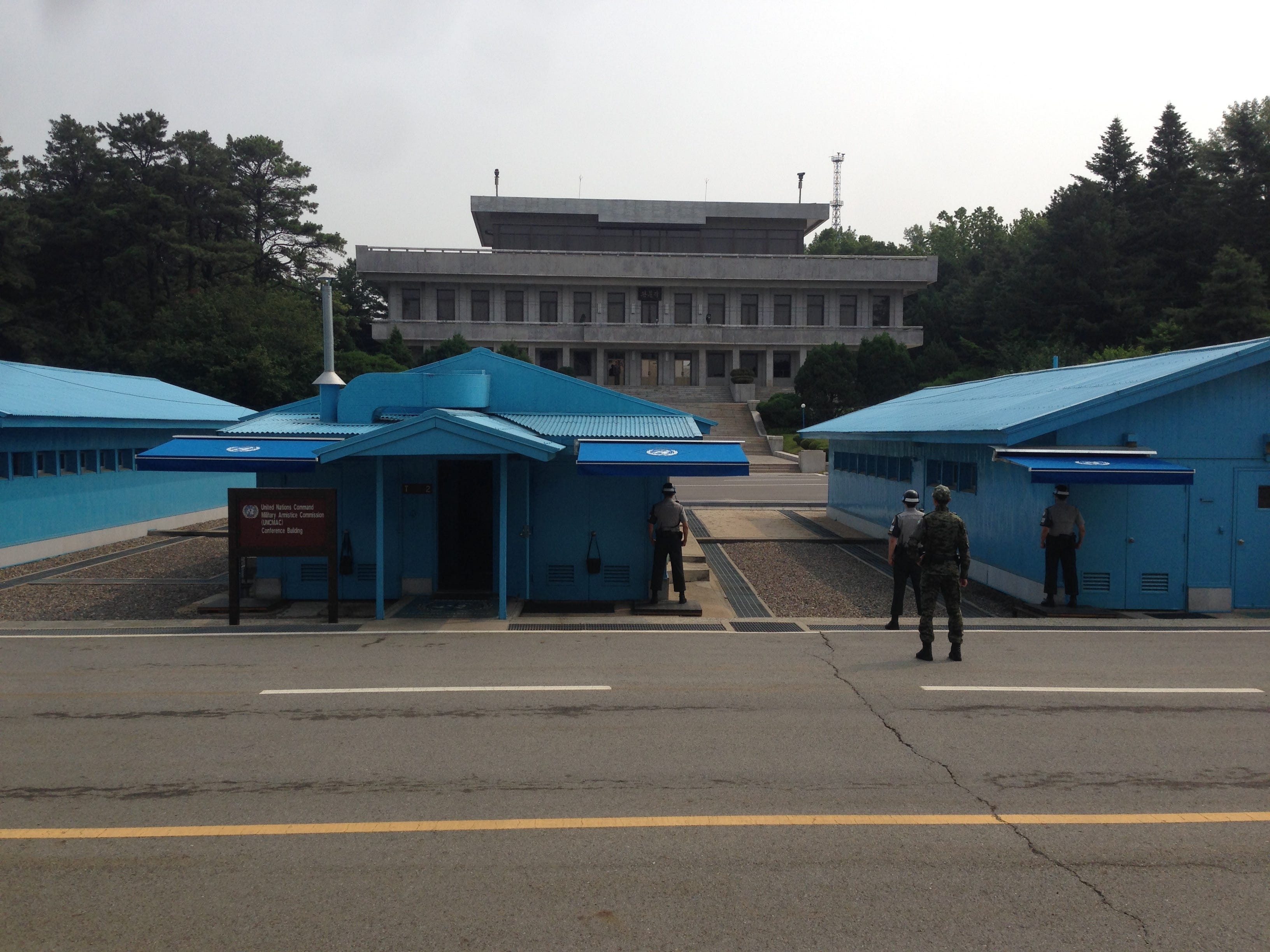
Big questions remain as the world comes to terms with North Korea’s newfound influence. Will the United States let bygones be bygones and offer up diplomatic recognition and a Pyongyang embassy in exchange for cooperation on all the extended issues Cha described in his recent essay, from policing cyber crime to stopping or slowing engagement with Russia’s war? Will Kim reciprocate, potentially straddling three ways to extract the most concessions from all of the world’s major powers? With the Korean peninsula now nuclear, how should South Korea approach its position? Can it continue existing under the U.S. nuclear umbrella, or should it be building up its own sovereign capability to bring its future into its own hands?
These are incredibly important questions, but the key fact remains: Kim did it, and the United States never did stop him or his father or grandfather. The challenge for the United States and the democratized world is that more countries are learning these tactics. They are playing the infinite waiting game and taking advantage of asymmetries to get what they want. Straddle hard enough for long enough, and power awaits.
Also check out
I wrote up book reviews on C. Thi Nguyen’s The Score, Suzy Hansen’s From Life Itself, and Neil Postman’s Amusing Ourselves to Death on my personal blog.
Via a Securities reader: General Davin R.M. Anderson, Commander of AFRICOM (and a Riskgaming participant!), and 1st Lt. Vincent Gasparri, Innovation Team Lead 173rd Airborne Brigade, talk about how AI is changing warfare.
Ukraine is using AI to target and intercept Russian drones.
Via Laurence Pevsner, this review of Endless Frontier: “mobilizing the faithful is not the same as rebuilding public legitimacy.”
More Team Telecom subsea cable hijinks, this time in Chile.
My university in Korea, KAIST, got a compact profile on its growing startup cluster.
Why noise matters in the U.S. Census (stats are hard).